Why Garnet Valley's Fast Market Doesn't Protect You From the Inspection Report
August 20, 2026
August 20, 2026
Homes in Garnet Valley are moving fast this year. As of April 2026, the median time on market across the school district sat at nine days, according to a weekly market analysis of the area, with only 2.11 months of inventory available across 45 active listings. By June, Movoto's tracking showed a median time on market of 13 days and a median list price of $732,000. By any measure, that is a seller's market.
And yet, in that same April snapshot, eight of those 45 active listings, nearly 18 percent, already carried a price reduction.
That number is the one worth sitting with. A market this tight should not be producing that many markdowns. If speed were the only story in Garnet Valley right now, almost nothing would need a price cut. Something else is happening underneath the headline pace, and it has less to do with buyer demand than with what buyers find once they get a house under contract.
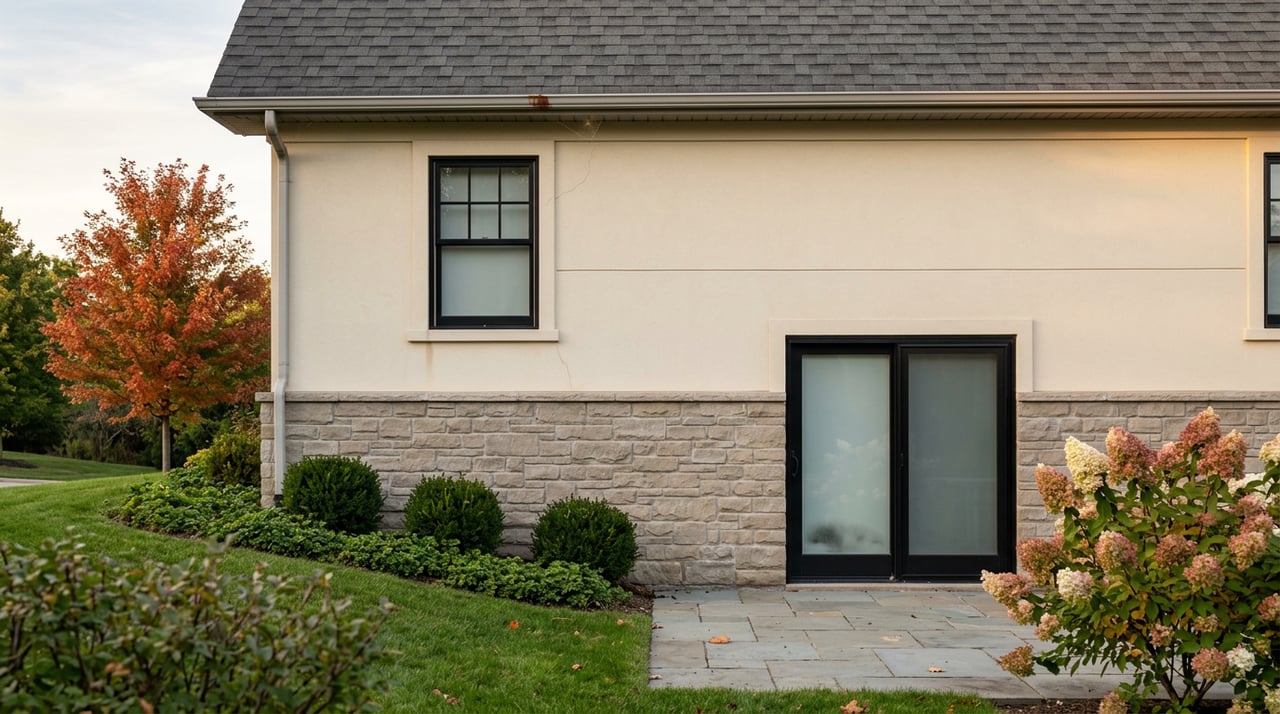
Most of the housing stock carrying the Garnet Valley name went up during a specific stretch, roughly the mid-1980s through the mid-2000s, as Concord Township's farmland gave way to colonial subdivisions along corridors like Brinton Lake Road. That building wave followed a fairly consistent recipe: poured concrete foundations, full basements that go walkout on the township's sloped lots, vinyl siding or synthetic stucco over engineered wood sheathing, HVAC equipment mounted in the attic, and decks attached after the fact.
Twenty to forty years later, that recipe is showing its age. A first wave of kitchen and bath renovations has often gone in over top of what the original builder left behind, which means a house can present beautifully and still carry the same aging systems underneath. Inspectors who work this stretch of Delaware County describe a specific, recurring pattern: a house that looks newer than its problems actually are. The finishes get updated. The attic HVAC unit, the synthetic stucco cladding, the deck ledger board connection, none of that gets touched, because none of it is visible from the kitchen island.
Real Property Inspections, a home inspection firm headquartered in Garnet Valley with about a dozen employees and roughly $5.3 million in 2025 revenue, does enough volume in this exact footprint that its findings amount to a running record of what this housing stock actually has going on. When that much local inspection activity keeps turning up the same categories of issues, it stops being bad luck for individual sellers and starts being a predictable feature of the market.
A short list of what tends to surface, based on the era and construction methods common to Garnet Valley:
That last point matters more than it might seem. Most of the newer subdivision stock runs on public utilities, but pockets of older and more rural-adjacent property in and around Concord Township still rely on a well and an on-lot septic system, and those carry their own disclosure obligations that a straightforward public-utility sale does not.
Pennsylvania's Real Estate Seller Disclosure Law, codified at 68 Pa. C.S. Sections 7301 through 7315, requires anyone selling residential property to complete a written disclosure statement before the buyer signs an agreement of sale. The statute's disclosure form asks directly about the source of drinking water, whether it is public, a community system, or a well, and about the type of sewage system, whether public sewer, private sewer, septic tank, or cesspool. It also asks whether the seller is aware of any leaks, backups, or other problems tied to plumbing or water and sewage systems.
The law's actual standard is more forgiving than most sellers assume. You are not required to hire an inspector before you list. You are not required to pull permits looking for old violations. What the law prohibits is knowingly withholding something you already know. If you have lived in a house for fifteen years and quietly patched the same basement window leak three times, that is the kind of thing a buyer's attorney could later argue you knew or should have known, even if you never wrote it down anywhere.
Properties with an on-lot septic system carry one additional wrinkle. Pennsylvania's Sewage Facilities Act requires a disclosure rider addressing that system to be attached to the agreement of sale, on top of the standard form. It is a small procedural step, but it is one that gets missed when a seller assumes the standard disclosure form covers everything.
Of everything on the disclosure form, radon is the item where timing changes the outcome the most.
That creates a choice every seller in this market effectively makes, whether they realize it or not. According to ParaDonHub, standard Pennsylvania purchase agreements build in an inspection contingency period, typically 10 to 15 days, during which a buyer can order their own independent radon test. The test itself is short, a continuous monitor placed under closed-house conditions for 48 to 96 hours. Almost every buyer runs this test somewhere in that window.
The seller who tests before listing controls the calendar. The seller who waits finds out on the buyer's schedule, in the middle of a live negotiation.
If a pre-listing test comes back elevated, a seller has options: install a mitigation system and go to market with clean, post-mitigation results, or price the home with the condition fully disclosed. Either path beats discovering the number during someone else's inspection period.
Go back to that April 2026 snapshot: 45 active listings, a median price of $684,900, an average of $865,188, and a spread running from $214,900 up to $1,795,465. Nine days median time on market. Only 2.11 months of inventory. Every one of those numbers describes a market where demand outruns supply.
The 17.8 percent price-reduction figure sitting inside that same data set is not a contradiction of the fast market. It is a description of what happens inside it. A house that goes under contract in nine days is a house where the buyer's inspection period turned up nothing that wasn't already accounted for in the price and the paperwork. A house that needed a markdown is very often one where an inspection surfaced something the listing price did not reflect, or a disclosure gap the buyer's attorney flagged before the deal could close as written.
In a market this tight, buyers are not walking away because they found a problem. They are asking for a number that reflects it, and if the seller has not already priced or disclosed for it, that negotiation happens in real time, under pressure, instead of on the seller's own schedule weeks before the sign goes in the yard.
None of this argues against listing in Garnet Valley right now. It argues for treating the prep stage as more than staging and paint. A pre-listing radon test, a clear-eyed look at the age of the attic HVAC system and the condition of any synthetic stucco, and a disclosure form filled out with real attention rather than checked off quickly, these are the difference between landing in the nine-day column or the 17.8 percent column.
That is the kind of groundwork Sandra brings to every Garnet Valley listing: knowing which systems in this specific housing stock tend to raise questions, getting ahead of the disclosure paperwork before it becomes a mid-contract negotiation, and pricing with the full picture in hand rather than hoping the market's pace covers for it. If you are thinking about listing in Garnet Valley and want a straight read on what your specific house is likely to face at inspection, reach out to Luxe Living by Sandy to get in touch and start the conversation before it starts on someone else's timeline.
This article is general information, not legal, tax or financial advice. Consult a qualified professional about your situation.
Stay up to date on the latest real estate trends.
Whether you’re buying, selling, or simply exploring your options, I am here to help. Let’s embark on this journey together, turning your real estate dreams into reality. Contact me today to schedule a consultation and take the first step towards finding your perfect place to call home.
601 E Baltimore Pk, Media, PA 19063